
Dungeon Picnic Building a Party of Four
Star Shards, Set Skill, Formation, and Starting Mana for a shared-MN picnic.
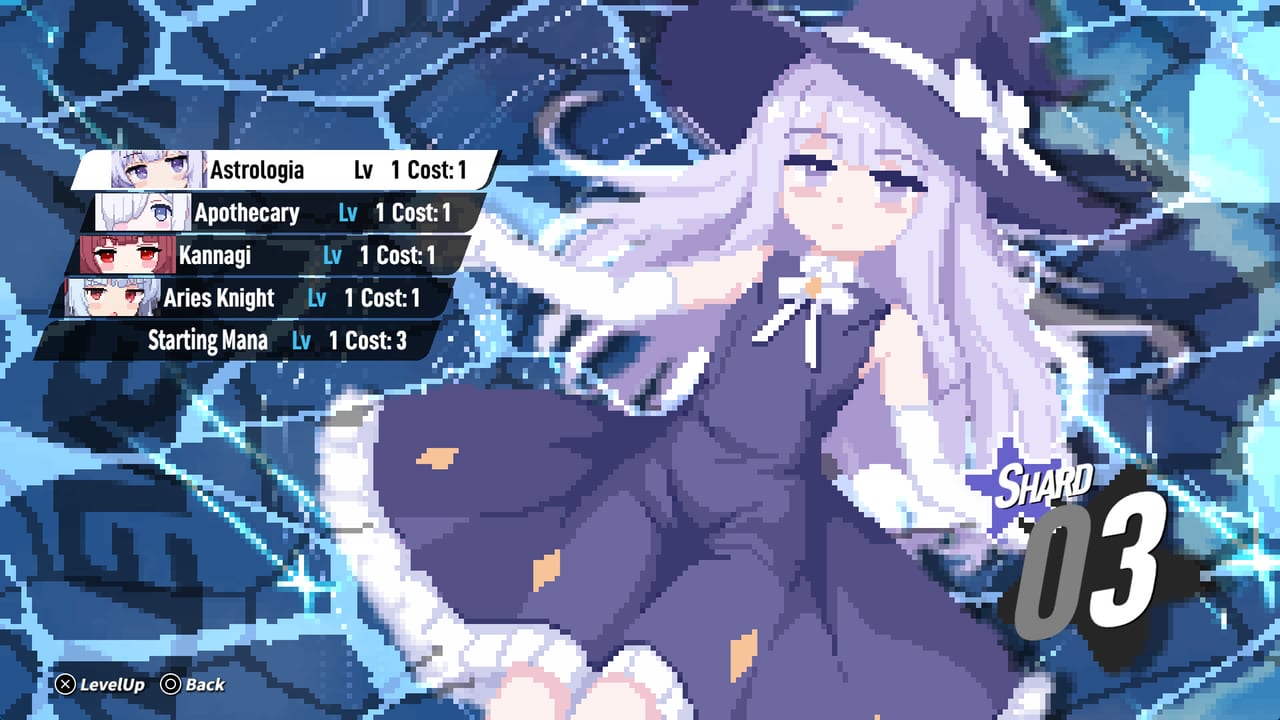
Dungeon Picnic asks you to field four heroines who share one Mana pool, one route, and one wipe. Party building is not a collectathon. It is a budget: Star Shards on the Level Up screen, skill rows on Set Skill, order on Formation, and the expensive habit of buying Starting Mana so the shared tank survives the second fight. This page is written for the limited demo’s four playable characters, with roster notes for names that already appear on equipment and status screens. The product version is still to be announced, and demo saves will not carry into it.
New players should finish Getting Started first. Combat math lives in the ReAct combat guide. A scratch pad lives on the party planner.
The demo four, and who is only roster text
The playable demo party is Astrologia, Apothecary, Kannagi, and Aries Knight. That is the synergy puzzle you can actually run in the first area. Astrologia is the comet kit: Hellfire Comet, Blizzard Comet, and Binary Star at 1 MN, Unlimited Meteor at 2 MN, Lunar Eclipse at 1 MN, Stellar Exploit with an infinity icon, and a published passive that reduces cooldowns on Break. Apothecary is the sustain kit: Counter Heal at 2 MN (cooldown 6, all allies, Heal.ELM, 50% heal), Heal All at 2 MN, and Poison Injection at 1 MN.
Kannagi is a fox-eared shrine maiden from a mystical clan, using a purification wooden sword against evil gods. Aries Knight matches the maid-knight look described in press coverage. This wiki does not invent skill names for either of them. Their value in a four-slot party is still real: they occupy Formation, they drink from shared MN, and they hold whatever Set Skill rows the Level Up screen actually gives you.
Harvester and Samurai are roster knowledge, not extra demo slots. Harvester is a self-proclaimed grim reaper who harvests HP from enemies, spends ally HP for strong skills, and uses Mercy Scythe to execute low-HP foes. A level 1 status screenshot shows HP 30, ATK 10, DEF 0, HEAL 8, SPD 98, Hit 100%, Crit 5%, Crit DMG 50%. Samurai appears on an equipment screen in a sailor uniform with a katana. The legendary artifact First Star Fragment grants SPD +25% and says that when battle begins, the wearer can act first. Samurai’s shown stats are HP 22, ATK 13, DEF 0, Healing POW 6, SPD 135, Hit 100%, Crit 5%, Crit DMG 50%. Use those numbers to learn how speed and first-action tools interact with ReAct, not to assume they join the demo picnic.
Lapismine has disclosed that some characters were designed with AI assistance and created by the developer. That is authorship, not a tier-list stat. Early opinions belong on the character ranking and skills ranking, labeled as demo-era notes.
Star Shards and the Level Up screen
StarShard (also written Star Shards) is the currency that fuels Level Up. Aether is a separate purse you meet on the mapless route; do not treat them as the same pile. Level Up offers random skills and options with visible costs. Characters cost 1. Starting Mana costs 3. Individual rows can show labels such as SHARD 03. Because the offer is random, the correct spend is the hole in your last fight, not a fantasy loadout you copied from a screenshot.
Starting Mana is expensive because MN is communal. Buying a character option at cost 1 can be correct when you need a body in Formation. Buying Starting Mana at cost 3 is correct when every fight ended with an empty tank and a Counter Heal you could not fire. If you dump shards into a flashy Meteor setup and then cannot pay for Heal All, you did not build a party; you built a highlight reel. The exploration guide explains how StarShard and Aether actually drop from events, which is why greedy enemy nodes and cautious rests change the shop you see later.
A wipe deletes skills and equipment. The next run randomizes finds. Shard planning is therefore per picnic, not per account. The limited demo will not migrate a perfected kit into the upcoming product version. Spend as if the next wipe is the real save point.
Set Skill, Equipment, and Formation
Set Skill is where ready versus cooldown becomes a party problem. Unlimited Meteor’s hit count equals the number of ready skills except cooldown 0, then it sets all skills on cooldown. A party that fills rows with tools that are always ready will make Meteor look brilliant right before the board goes dark. A party that keeps Counter Heal and a 1 MN comet ready will survive the fights Meteor is not meant to touch. Do not leave a Set Skill slot empty because you are waiting for a name this wiki refuses to invent.
Equipment is where artifacts such as First Star Fragment teach a lesson even if you never see that exact legendary in the demo: first action can be a Break engine. AutoEquip is bound to Triangle on gamepad; the controls guide lists that prompt so you do not mash it by accident. Unequip All lives on OPTIONS. Inspect pieces on the Equipment screen before you let AutoEquip flatten a speed plan.
Formation is turn-order politics. Put the heroine who inflicts Breaks where she can act before the shared pool is empty. Put Apothecary where Counter Heal can still be paid after a comet. Kannagi and Aries Knight should stand where their actual skills, whatever the demo offered you, support that MN story. Status is the screen for confirming HP, ATK, DEF, HEAL, SPD, Hit, Crit, and Crit DMG so you are not guessing. Item is the consumable row; do not hoard a heal item through a wipe that will delete your kit anyway.
Synergy that respects shared MN
The demo synergy that is actually documented looks like this. Astrologia creates Breaks with cheap comets and then enjoys cooldown reduction on Break, which feeds ReAct. Apothecary converts leftover MN into all-ally heals and a poison chip. Kannagi’s purification identity and Aries Knight’s frontline identity fill the other two slots so you are never running a two-person picnic. Follow-ups and counters ignore turn order, so a counter from Apothecary can fire outside Formation sequence if the pool can afford 2 MN.
Avoid two traps. First, stacking every shard into Astrologia until Meteor is always tempting; the card still locks every skill afterward. Second, treating Harvester’s ally-HP spend as a template for the demo four. The demo party is not an HP-sacrifice team in the published kit. Mercy Scythe is Harvester’s execute, not a hidden Aries Knight button.
Steam lists the game as single-player only. You are not matching with friends. The four slots are yours, and the wipe is yours. Official storefront context is the Steam store page. Demo rules, including streaming and no save transfer, are in the demo guide. Dates sit under updates.
When a picnic ends, audit shards the way you audit MN. Note whether SHARD 03 rows were impulse buys, whether Starting Mana at cost 3 would have saved Counter Heal, and whether Formation let the wrong heroine drink first. Then open the party planner and write a four-name line with one job each: Break, heal, purification pressure, and frontline. That written line is the build. The next random Level Up offer should be accepted or skipped against that line, not against a wish for roster members the demo will not add.
Frequently Asked Questions
Quick answers for demo runs, ReAct combat, and party building.
How many characters do I play in the demo?
Four: Astrologia, Apothecary, Kannagi, and Aries Knight. Harvester and Samurai are roster notes, not extra demo slots.
What should I buy on the Level Up screen?
Spend Star Shards on the hole from your last fight. Character options cost 1. Starting Mana costs 3 and raises the shared MN tank. Random rows can show SHARD 03. See Getting Started for the full menu list.
Why does Formation matter if combos ignore turn order?
Follow-ups and counters ignore the queue, but first action still decides who inflicts Break before the pool is empty. Speed items such as First Star Fragment teach that lesson. Combat details are in the ReAct combat guide.
Do I keep skills after a wipe?
No. A wipe removes skills and equipment, and the next run randomizes finds. Plan each picnic on the party planner instead of assuming a permanent loadout.
Is there a cooperative party mode?
No. Steam lists Dungeon Picnic as single-player only. You assemble four heroines inside one run. Demo limits and save rules are on the demo guide.